Library
Guides
Short, practical lessons written for beginners — clear language, no gatekeeping.
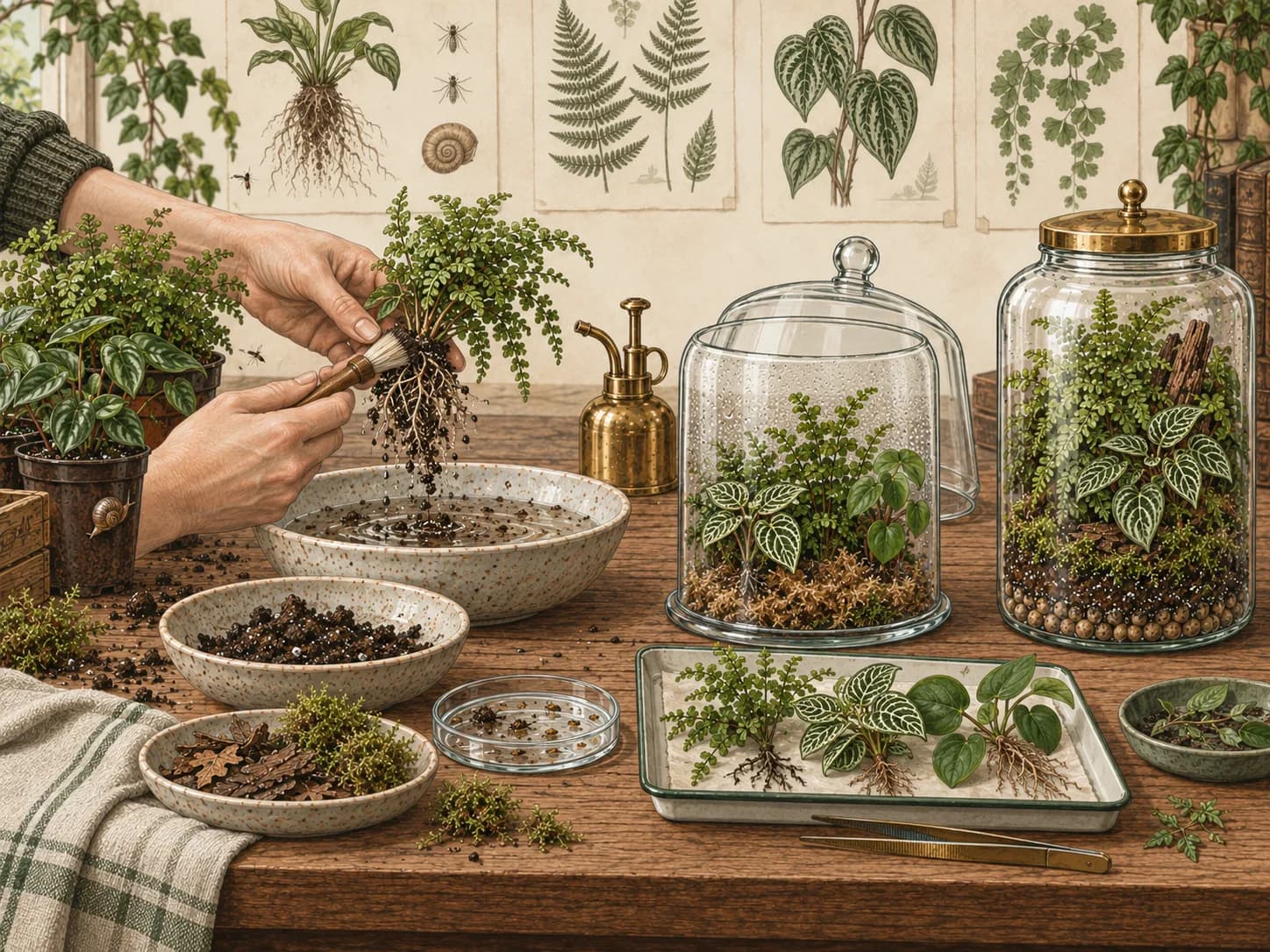
Quarantine and Settling New Terrarium Plants
How to keep snails, mites, fungus gnats and pesticide residues out of a sealed case by holding new plants in a simple quarantine, rinsing nursery soil, then settling them gently into high humidity.
9 min read
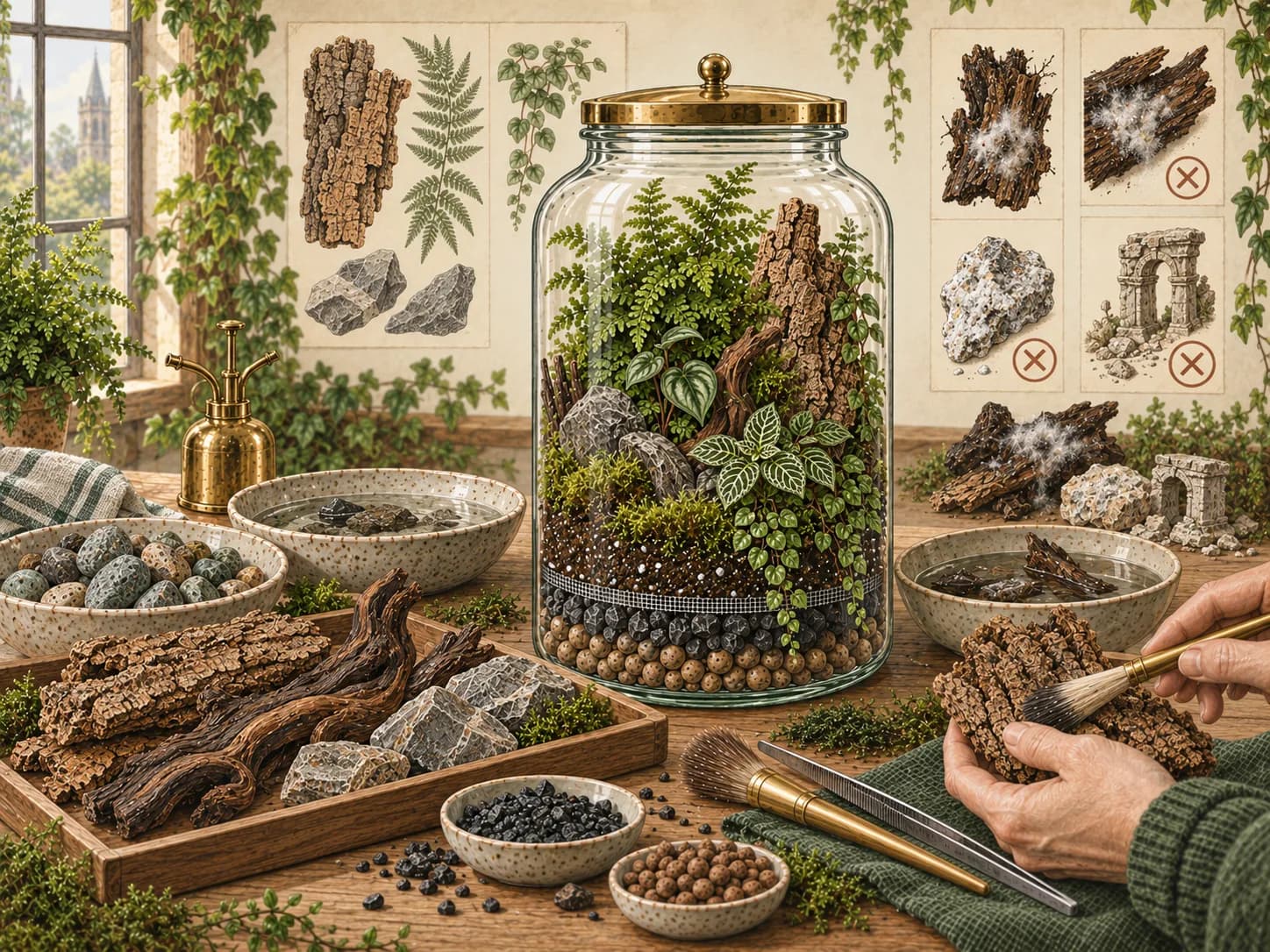
Hardscape That Stays Safe Under Glass
Choosing and preparing wood, cork, stone and ornaments so they do not leach toxins, collapse, salt the substrate, or seed endless mould blooms inside a humid case.
10 min read
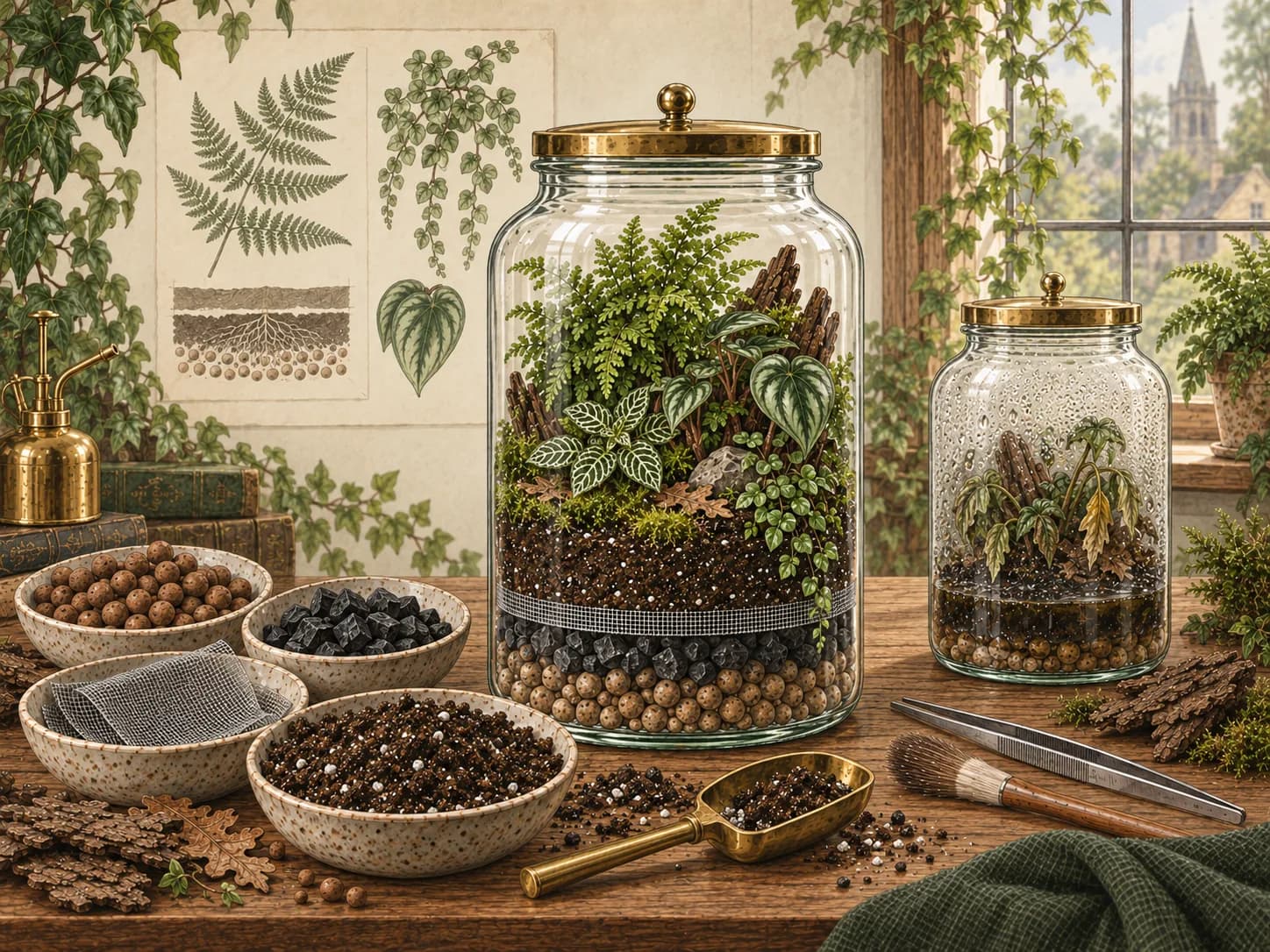
Drainage Layers: What Actually Matters
Separating myth from function: why jars without holes still use LECA or gravel, when charcoal helps, why a mesh barrier matters, and why a drainage layer cannot save chronic overwatering.
9 min read
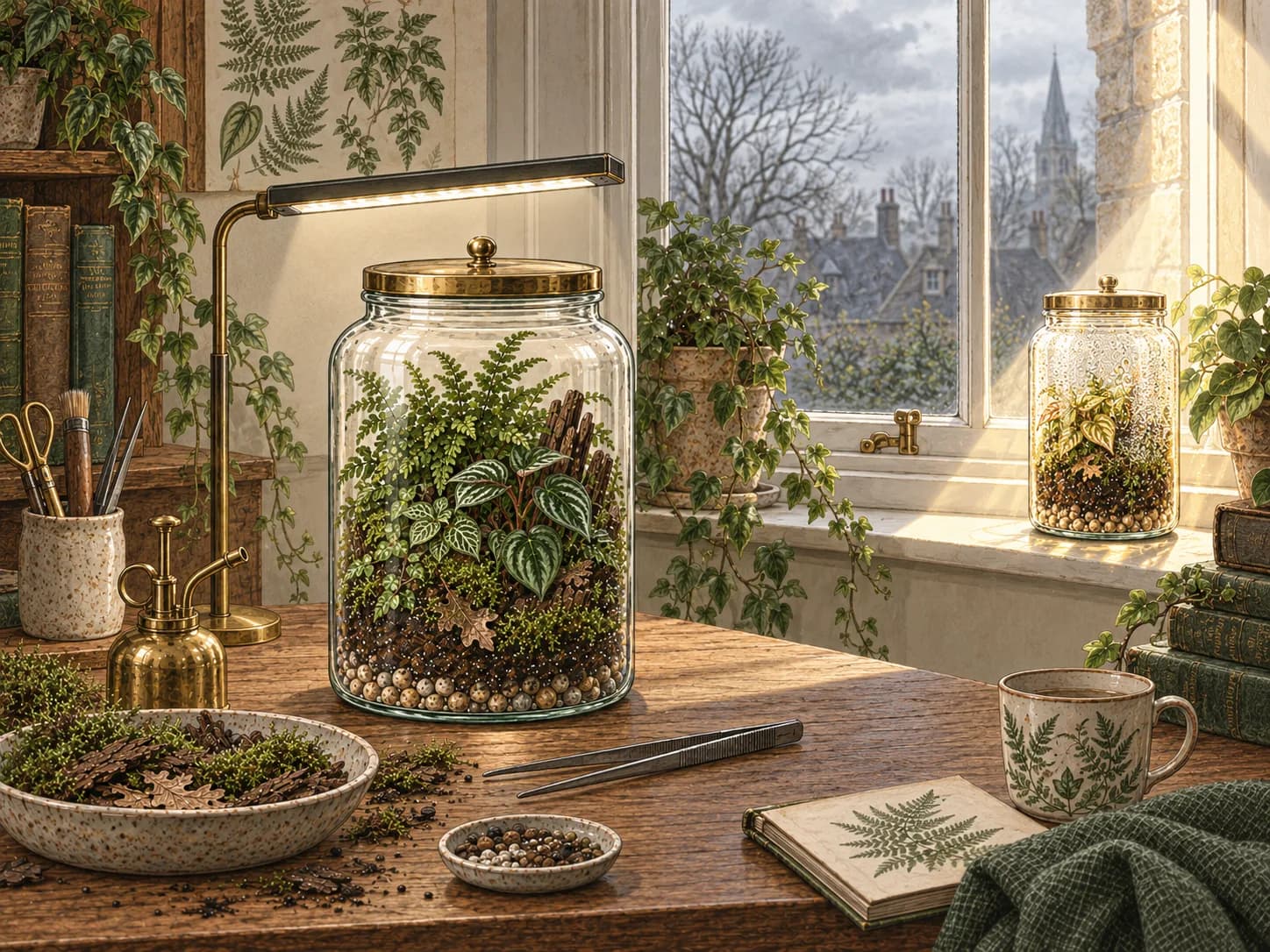
Light, Windowsills and Grow Lights for UK Terrariums
How British daylight (short winters, weak north rooms) shapes terrarium placement, when a simple full-spectrum LED earns its keep, and how to avoid cooking a sealed jar on a sunny sill.
10 min read
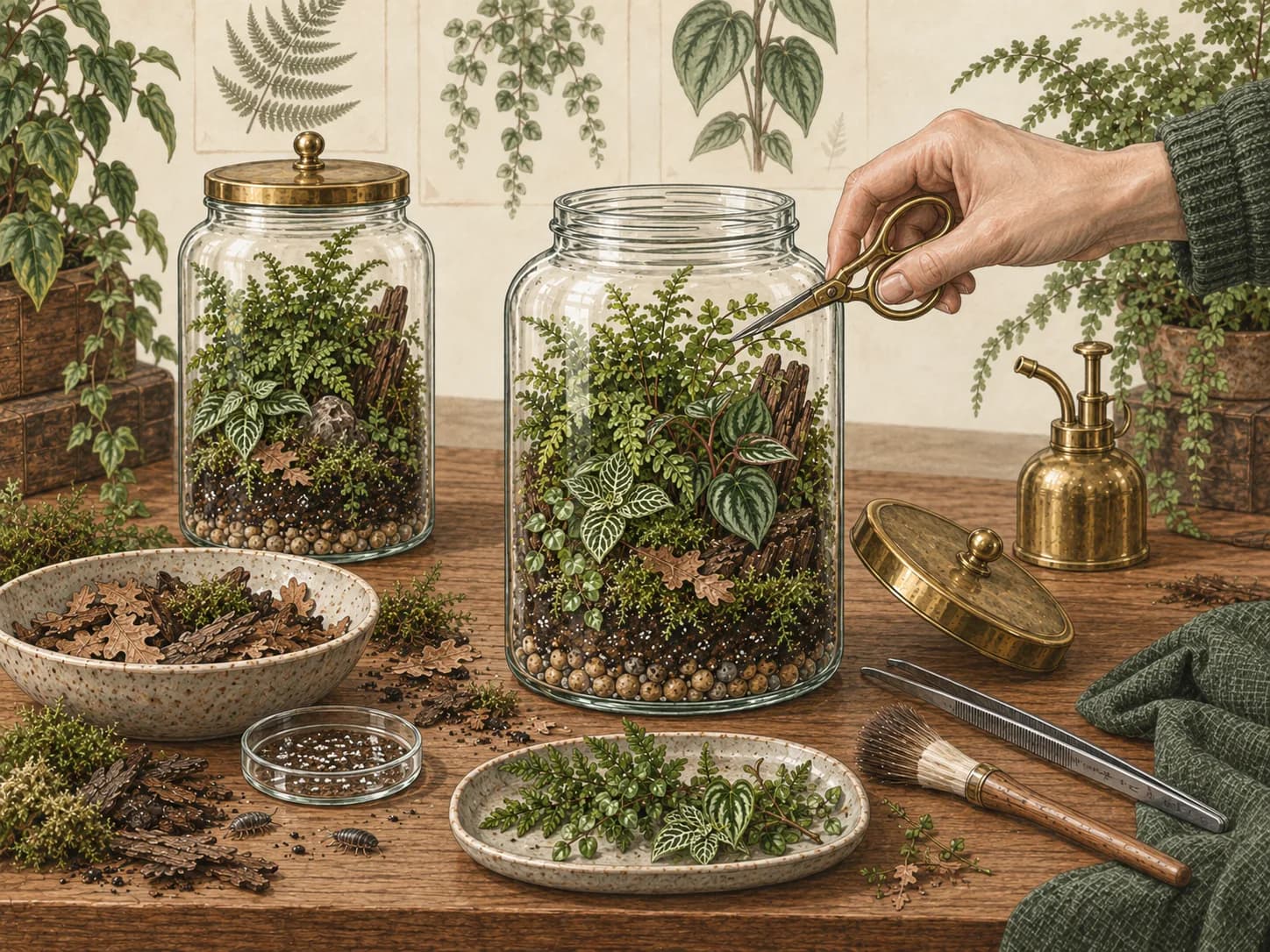
Pruning and Long-Term Terrarium Maintenance
Closed cases are low-input, not no-input: how to prune for airflow and light, refresh litter for fauna, and keep a jar beautiful for years without constant tinkering.
8 min read
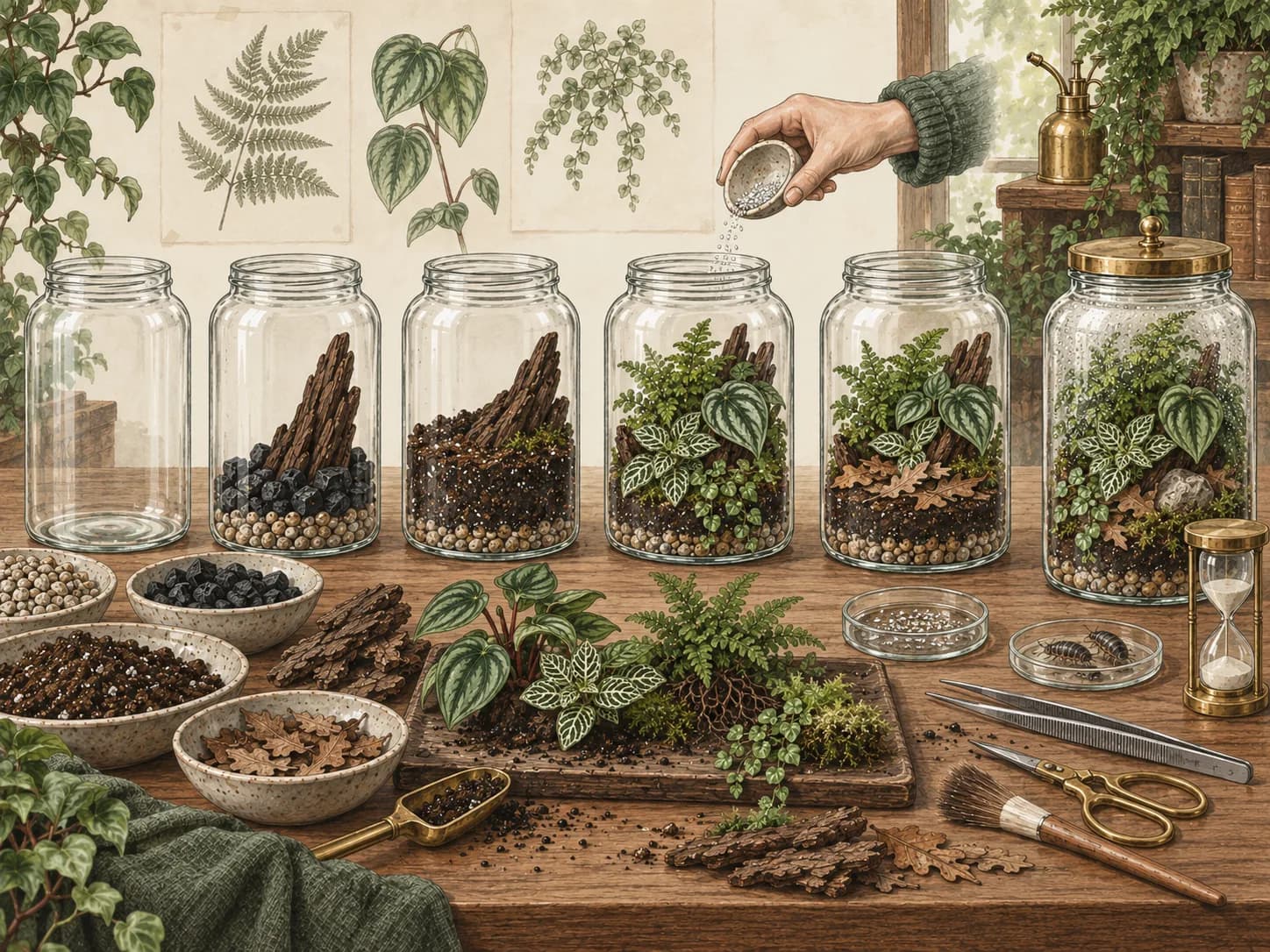
Bioactive Order of Operations
A practical build sequence for plant-first bioactive jars: hardscape and substrate before plants, springtails before (or well ahead of) isopods, leaf litter as pantry, and patience before declaring victory.
10 min read
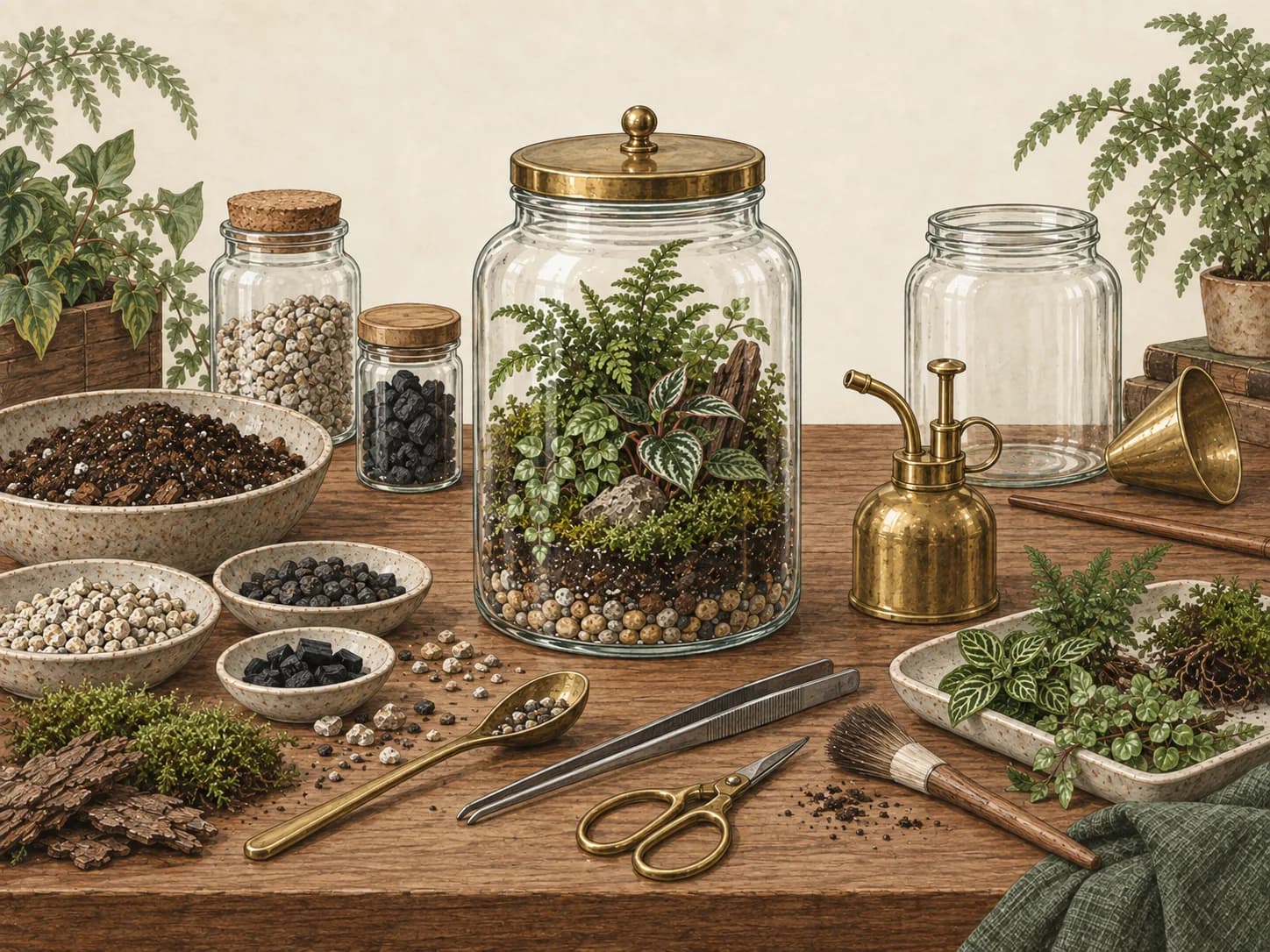
Beginner Tools and Kit for Terrarium Building
A short, UK-practical kit list: what you truly need to build and maintain a first closed case, what can wait, and which must-have gadgets are optional.
7 min read
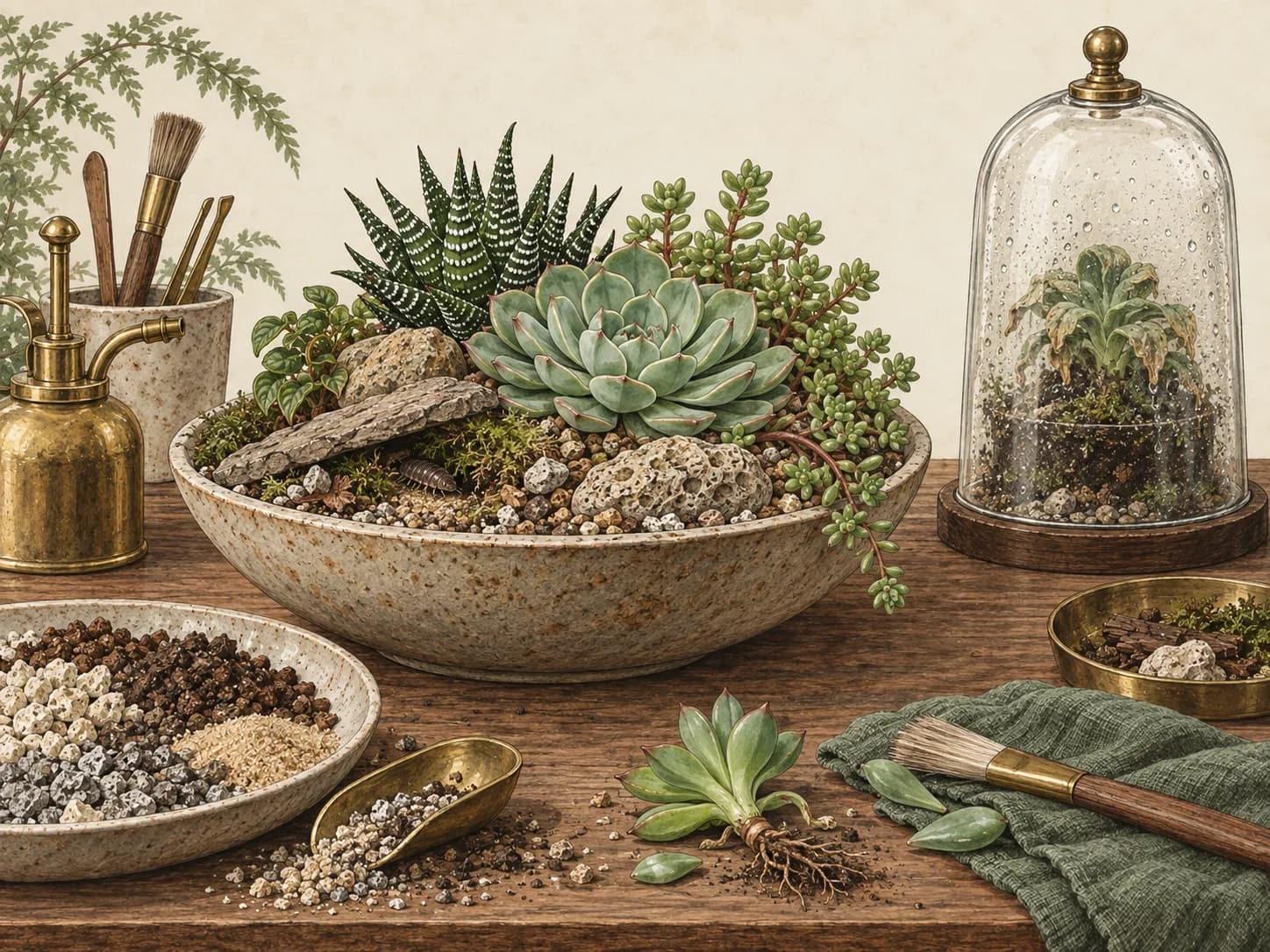
Open Arid Bowls: The Contrast Path
Why succulents belong in open bowls, not Wardian sealed cases — gritty soil, airflow, sparse watering, and how cleanup crew (if any) must be temperate drought-tolerant species with a hidden damp refuge.
9 min read
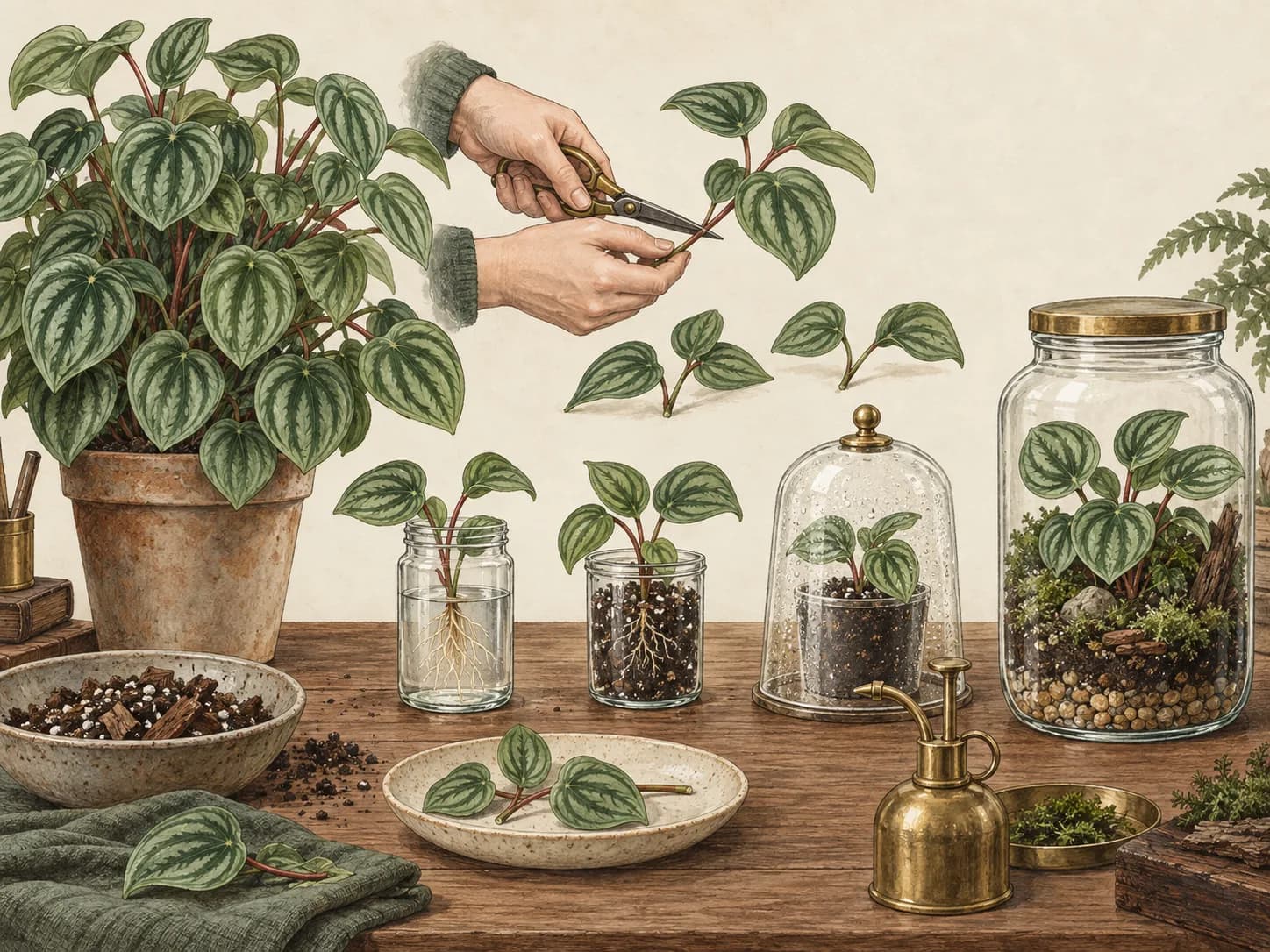
Propagating Cuttings for Terrarium Jars
Turn one healthy Fittonia or Peperomia into several jar-ready plants — water vs substrate rooting, humidity tricks, and when a cutting is tough enough to seal.
8 min read
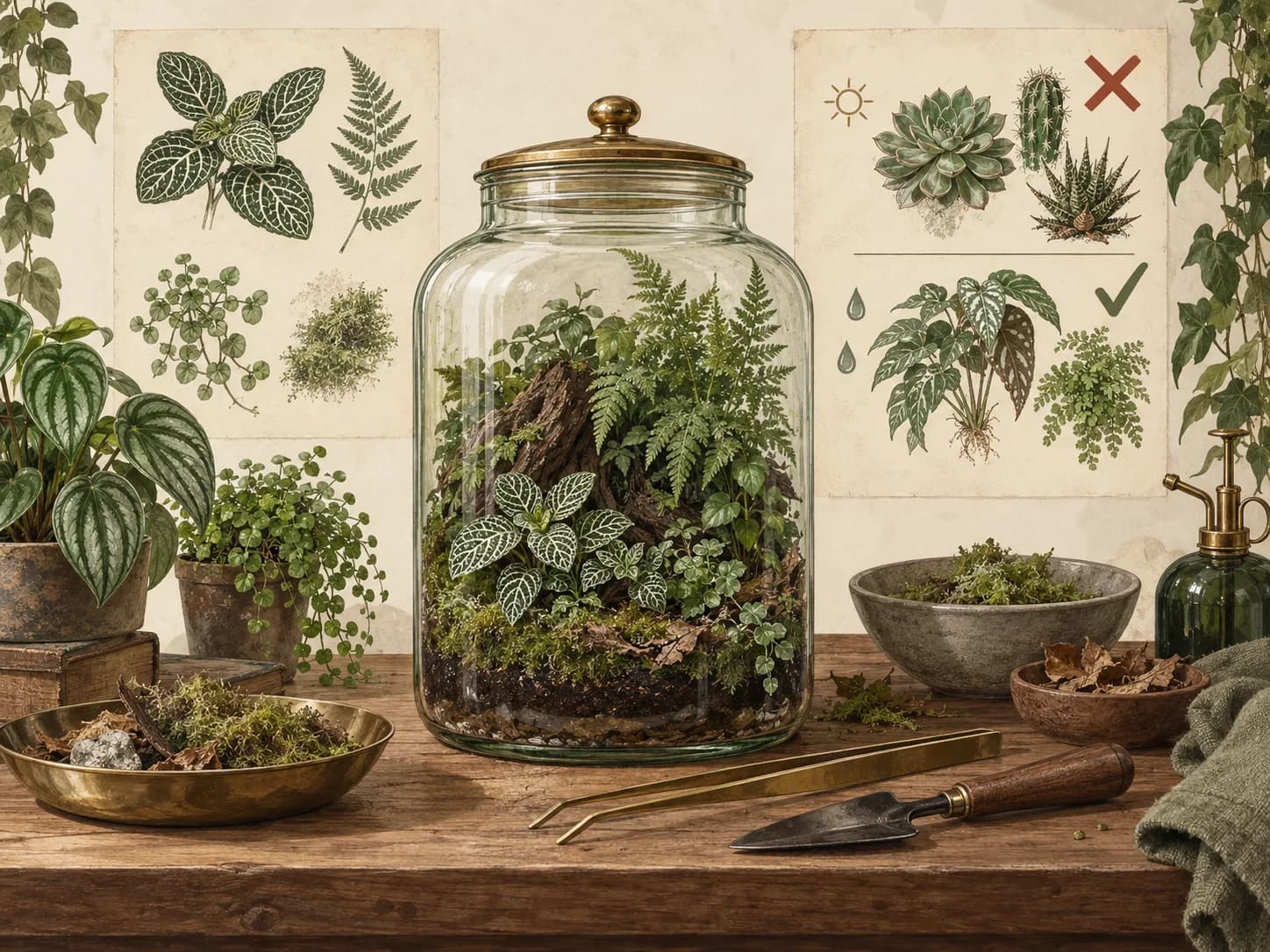
Matching Plants to One Climate
A terrarium succeeds when every plant wants the same light, humidity and airflow — not when the jar looks like a gift-shop sampler of opposites.
9 min read
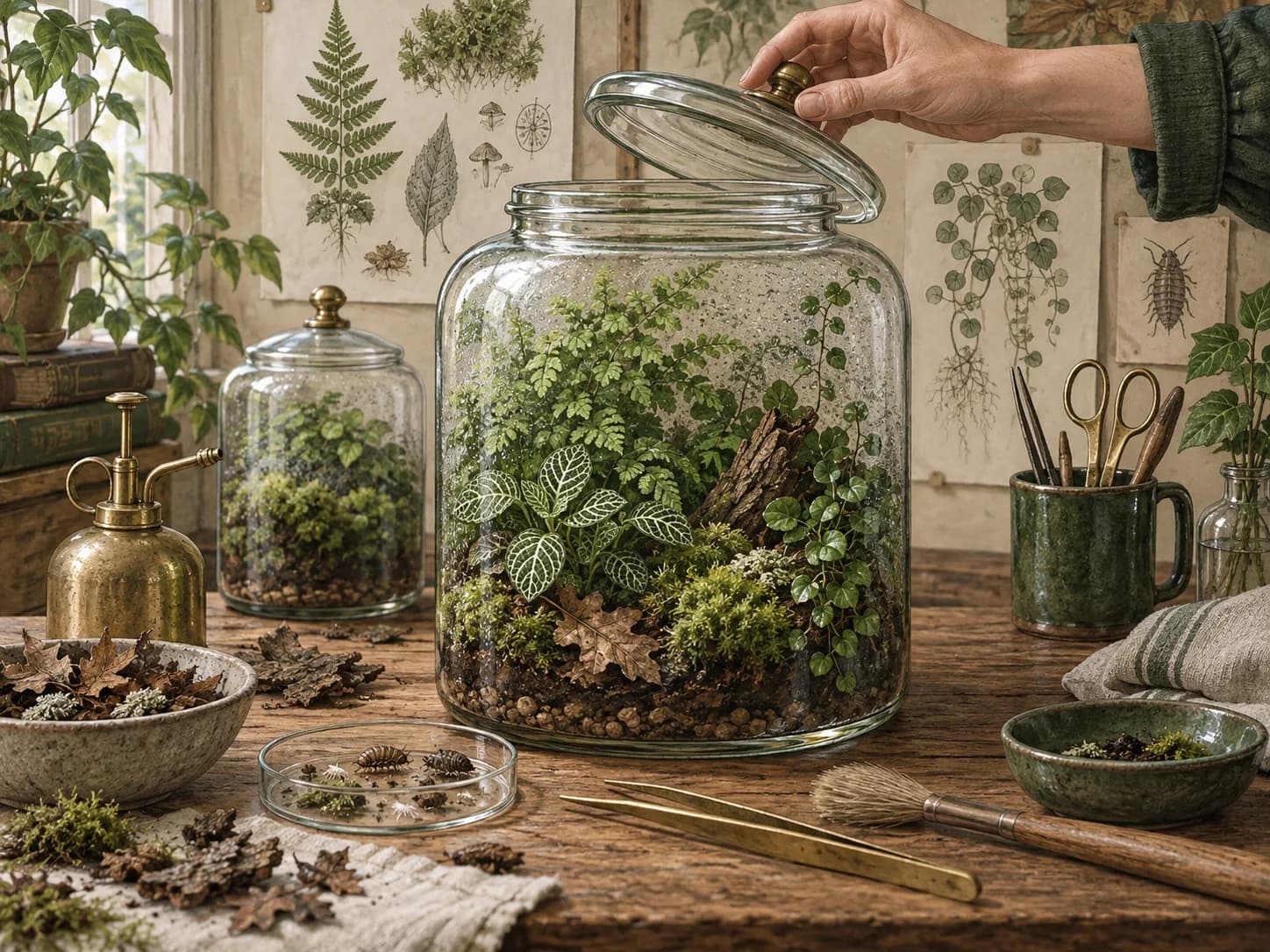
Cycling and Venting a New Closed Case
The first fortnight after sealing is a negotiation with moisture and microbes — how to vent on purpose, read condensation, and introduce cleanup crew without panicking at every white speck.
9 min read
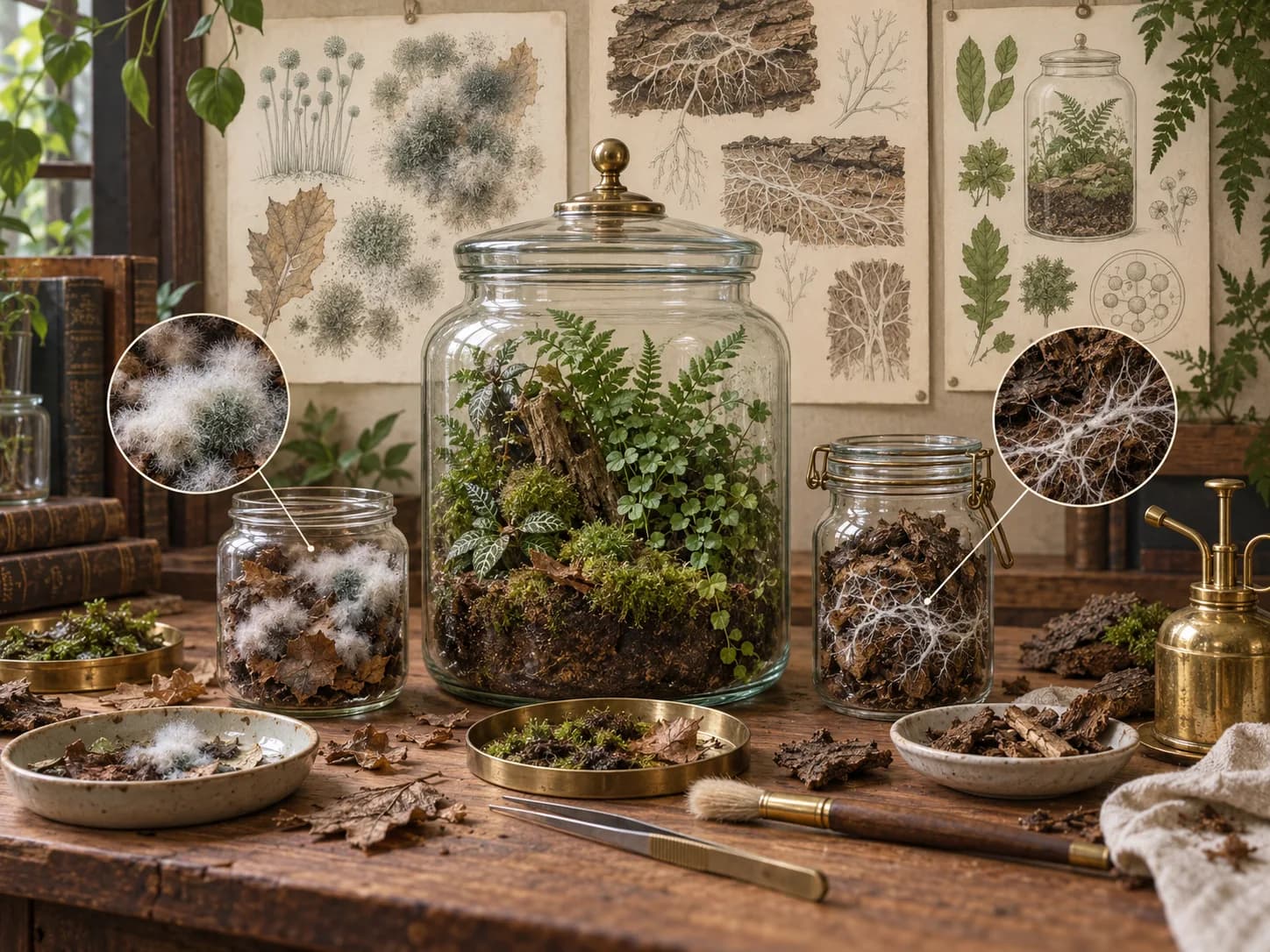
Mould vs Mycelium: How to Tell What You’re Seeing
Fuzzy panic vs fine white threads: how beginners can distinguish nuisance mould from useful saprotrophic mycelium, and what to do without nuking the ecosystem.
9 min read
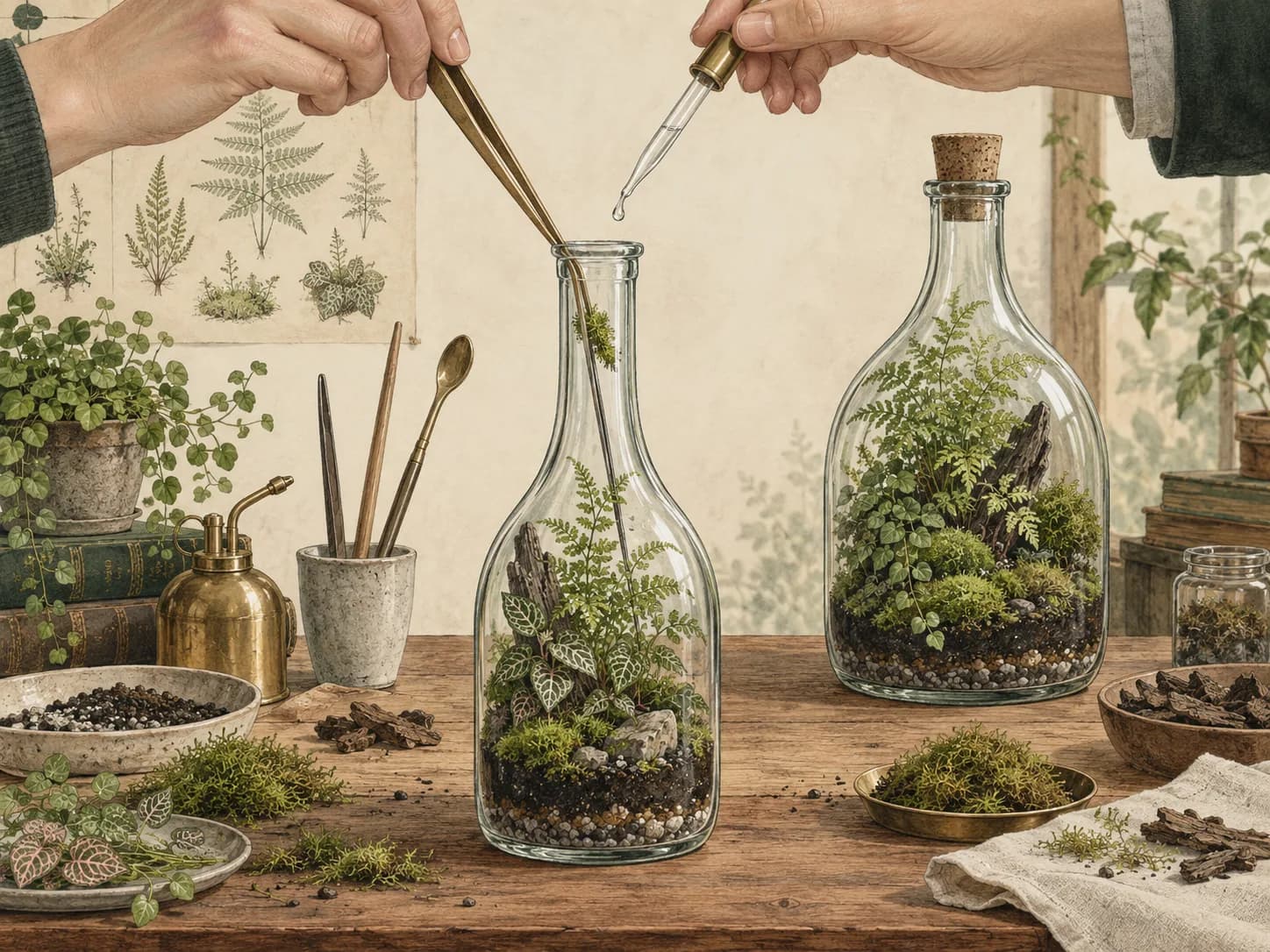
Bottle Gardens (Advanced)
Narrow necks demand patience, slow growers, and tiny water doses.
9 min read
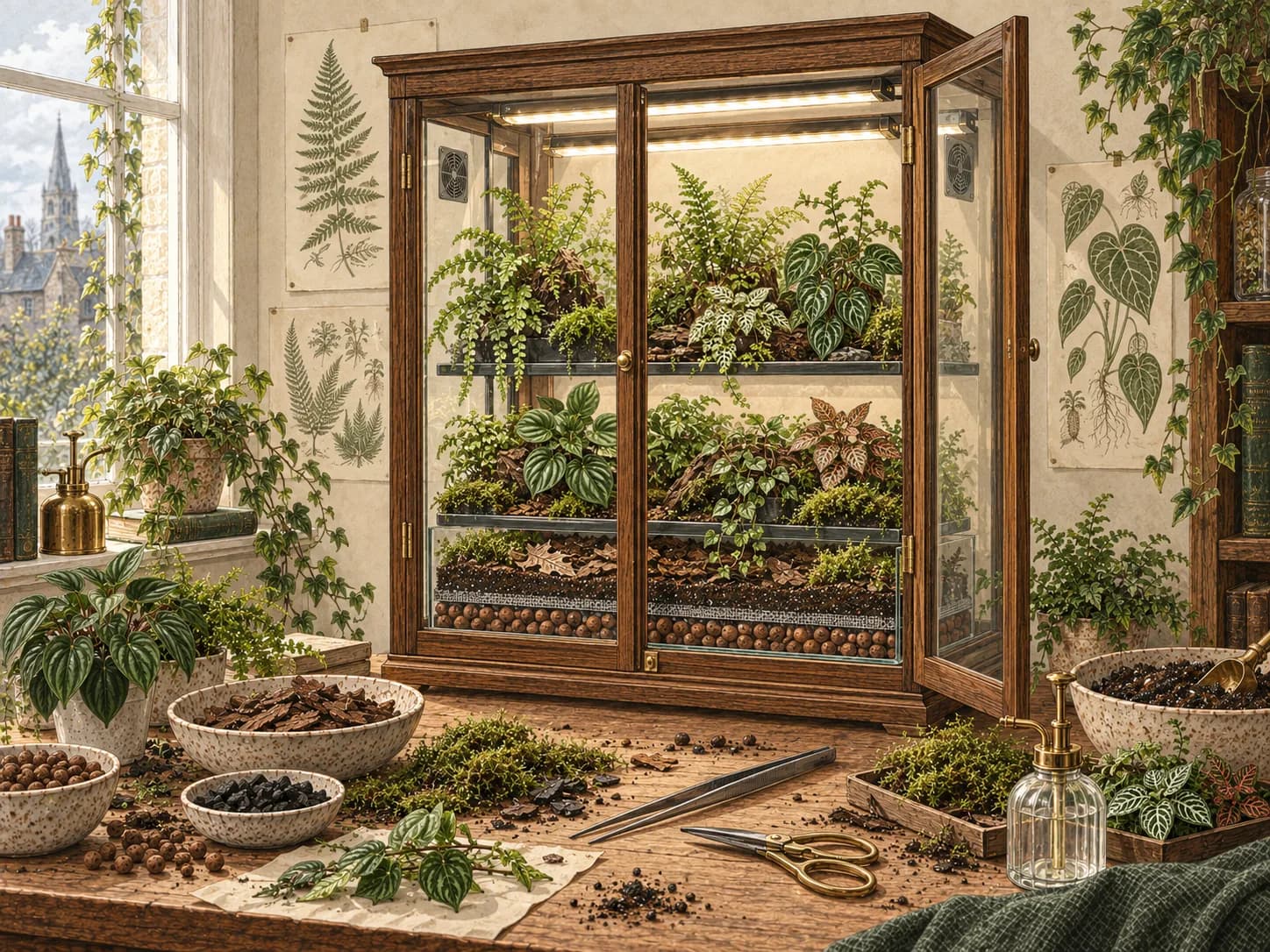
Setting Up a Cabinet Case
Lights, vents, and layers for a larger humid collection.
10 min read
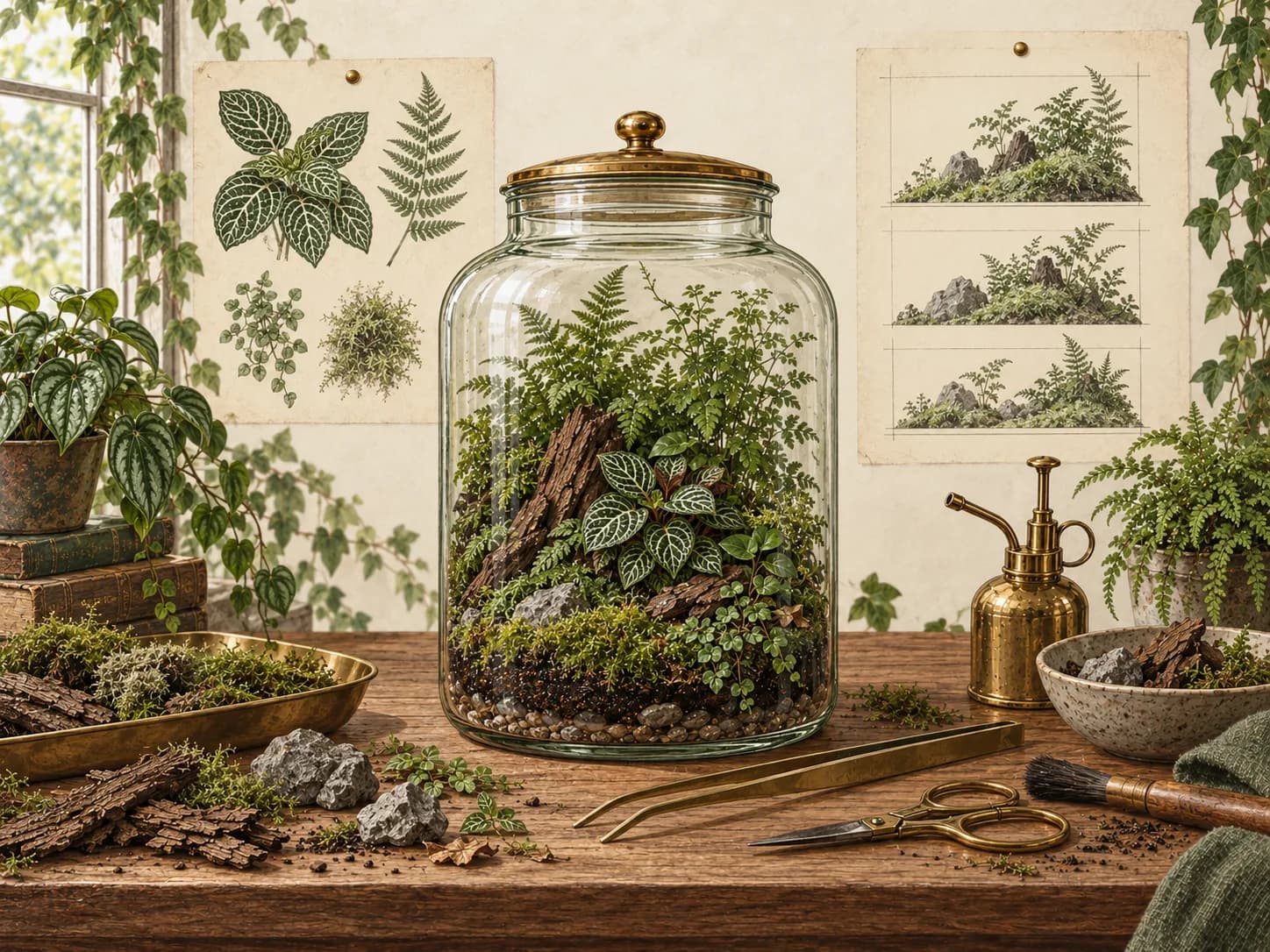
Composition & Scale
Foreground, mid-ground, background — make a tiny scene read clearly.
7 min read
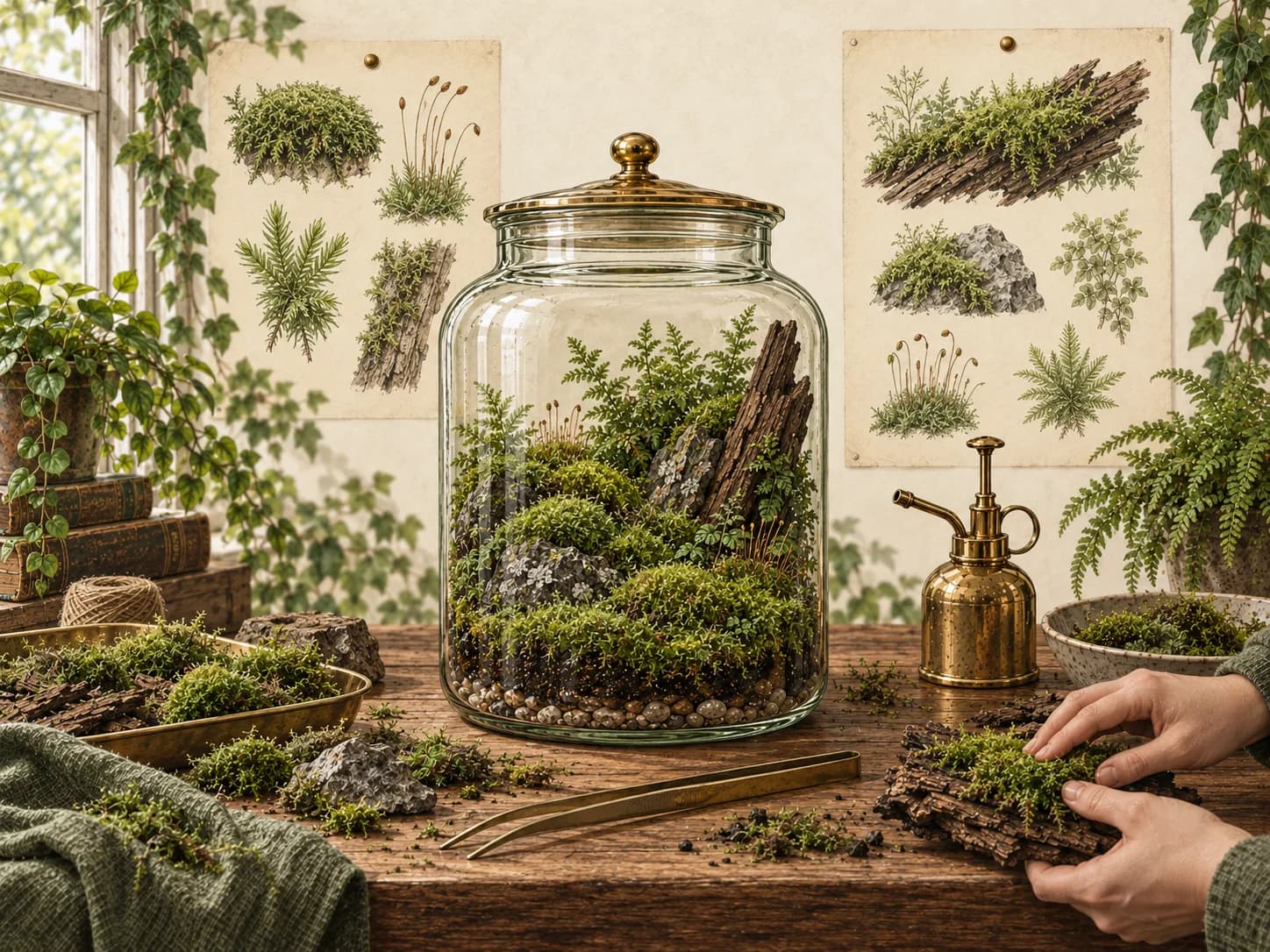
Moss Care
Keep carpets green with mist, shade, and contact.
7 min read
How to Choose a Case
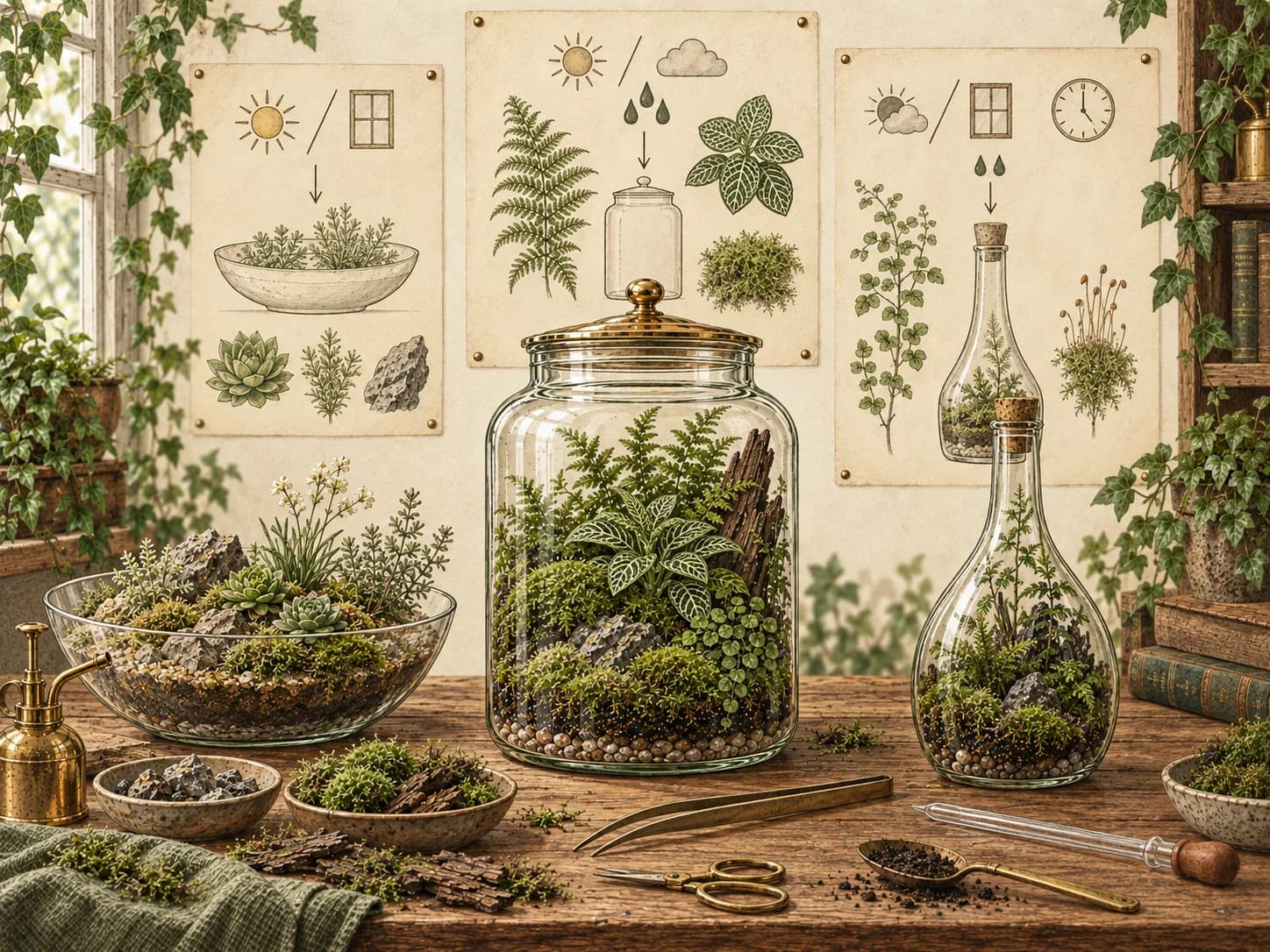
A short decision path based on life, light, and maintenance time.
6 min read
Troubleshooting Common Issues
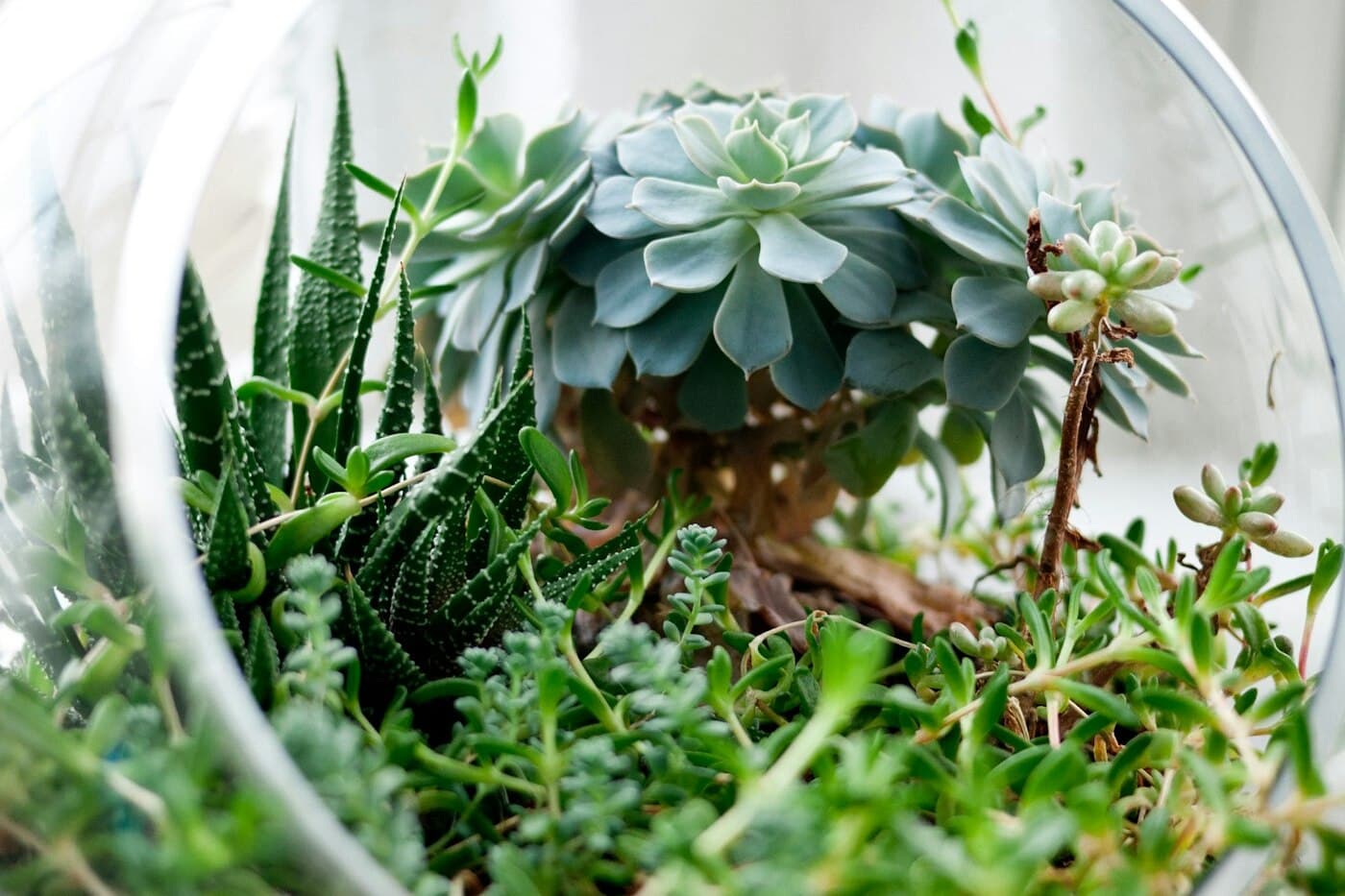
Yellow leaves, mushy stems, brown moss — change one thing, then wait.
12 min read
Substrate Basics
Air, water, and structure — the three jobs of a good mix.
9 min read
Isopods for Beginners
Visible cleanup crew once springtails are thriving.
8 min read
Adding Springtails
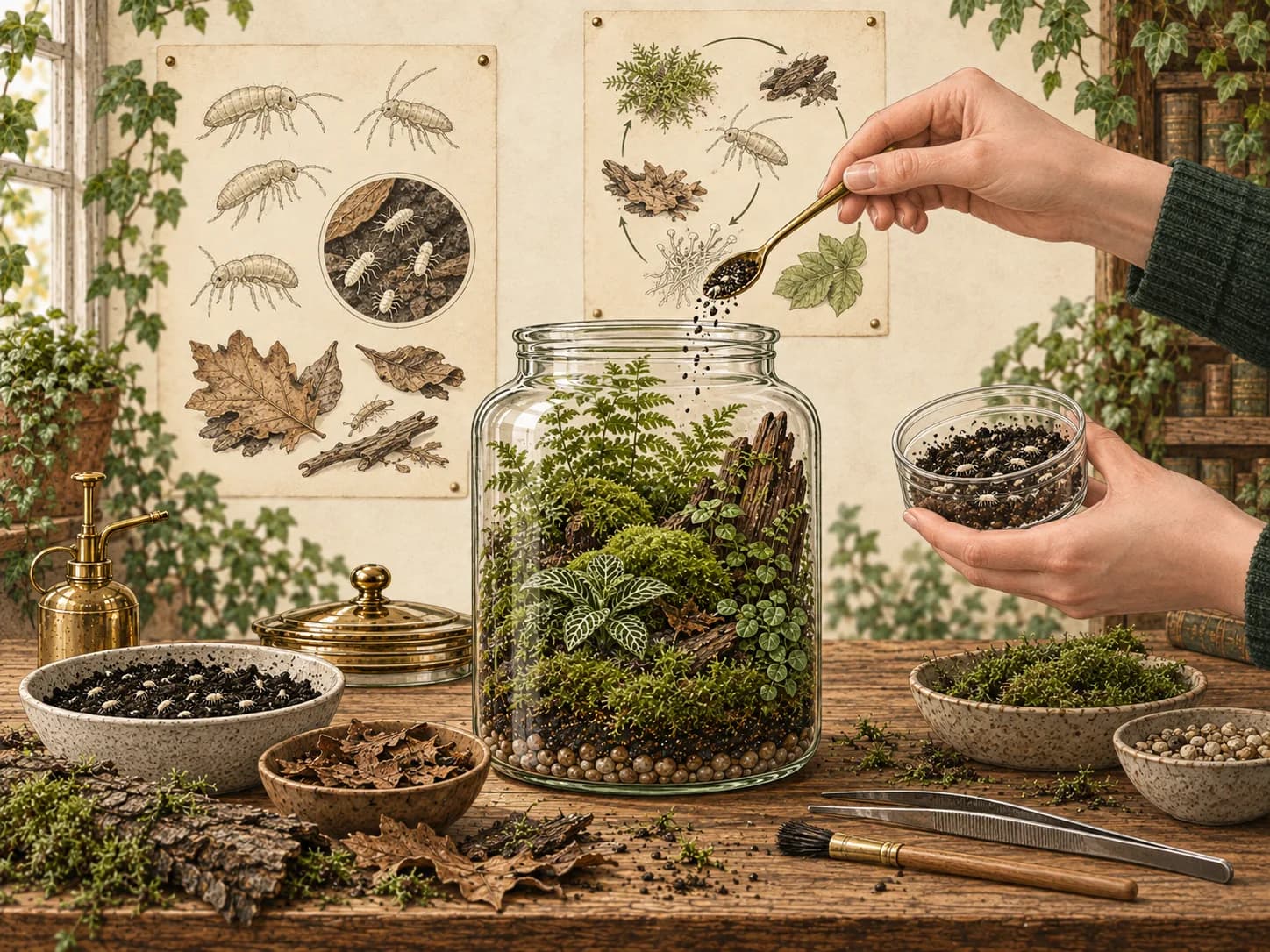
Why microfauna are the friendliest bioactive upgrade.
7 min read
Watering & Condensation
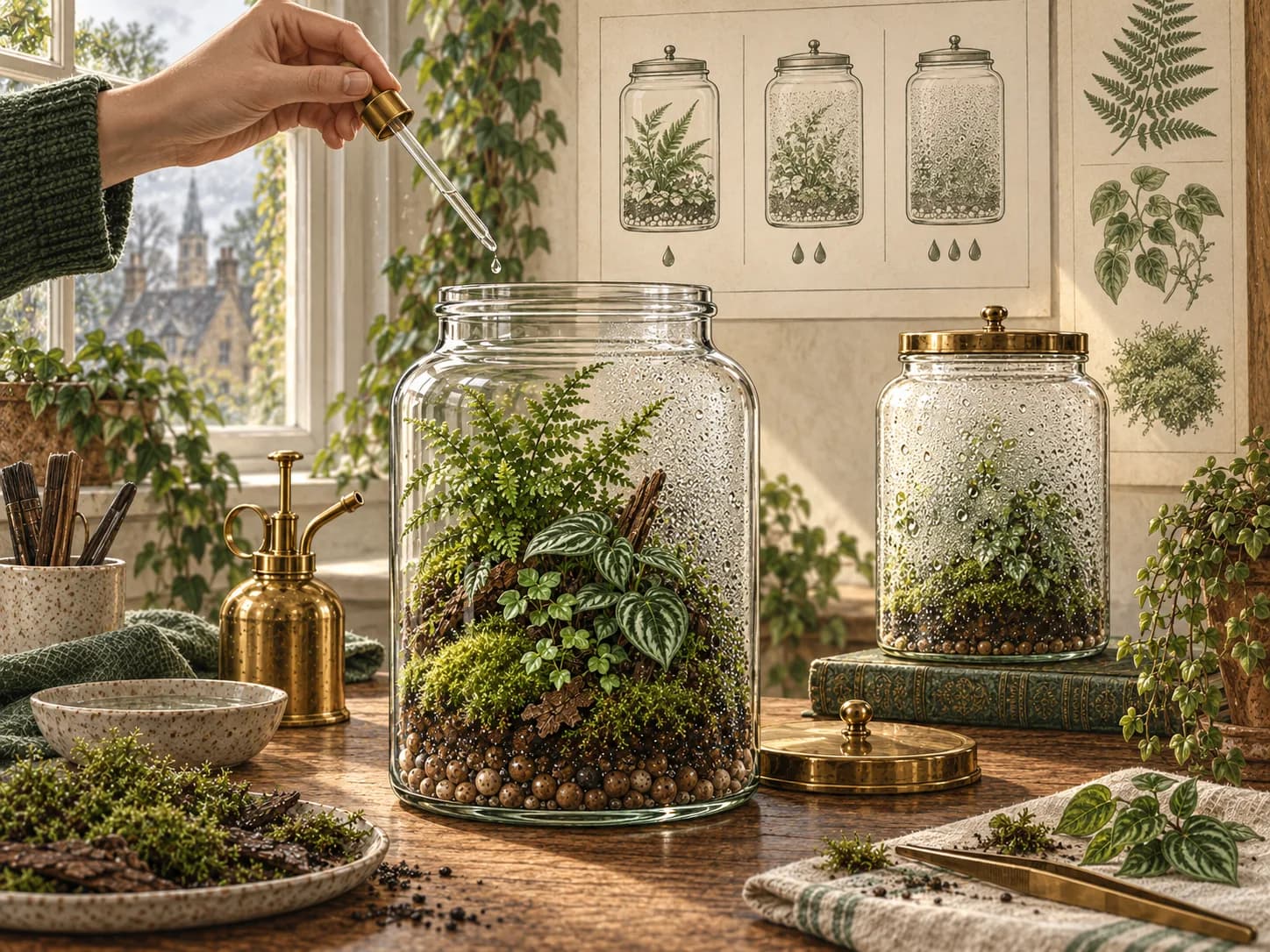
Read the glass like weather — then add or take away water in tiny amounts.
12 min read
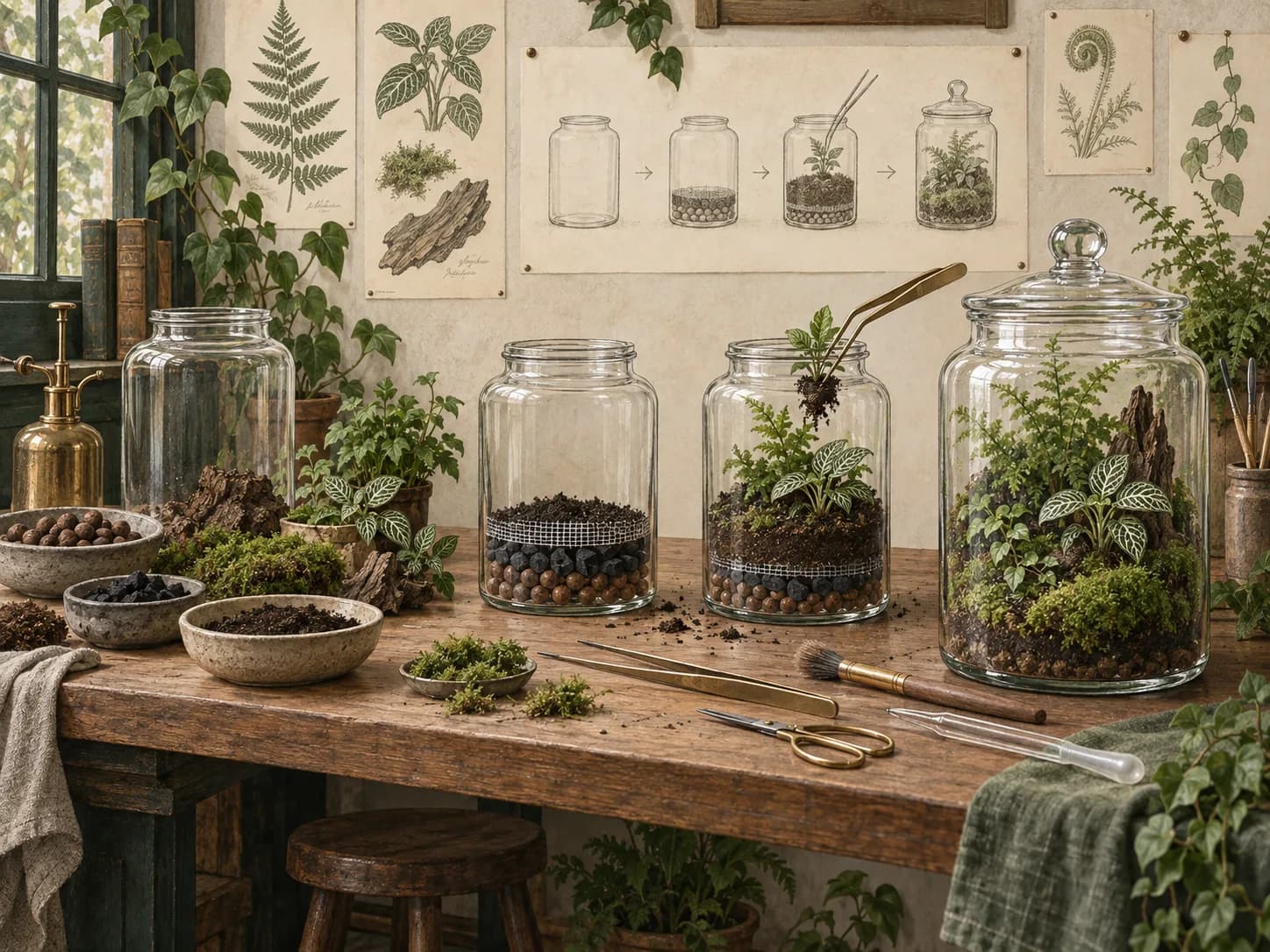
Your First Terrarium
A calm, beginner pathway from clean glass to living scene.
12 min read
Closed vs Open Cases
Pick the climate before you pick the plants.
7 min read
What Is a Terrarium?
A tiny planted world under glass — how the water cycle makes it work.
8 min read