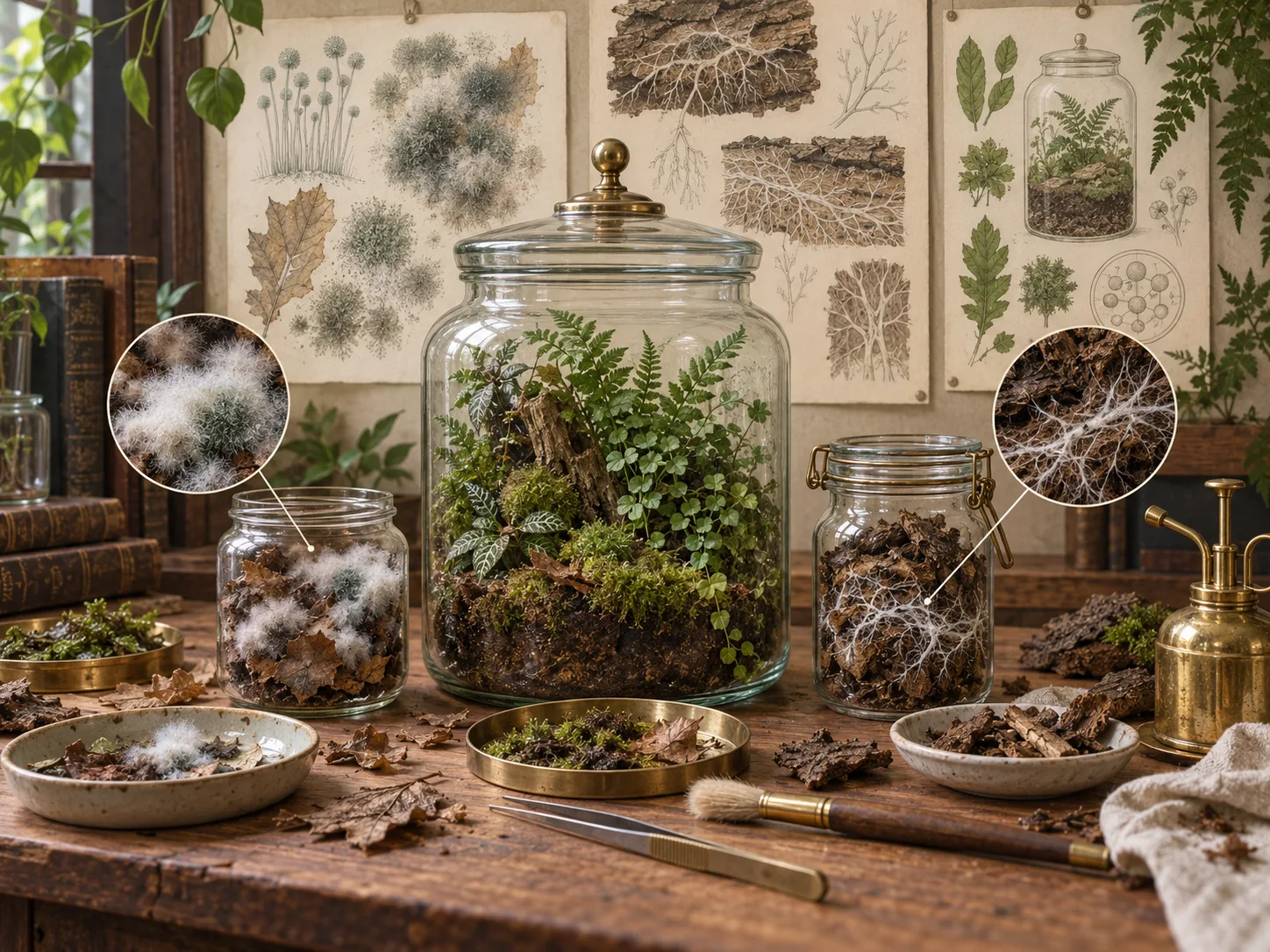
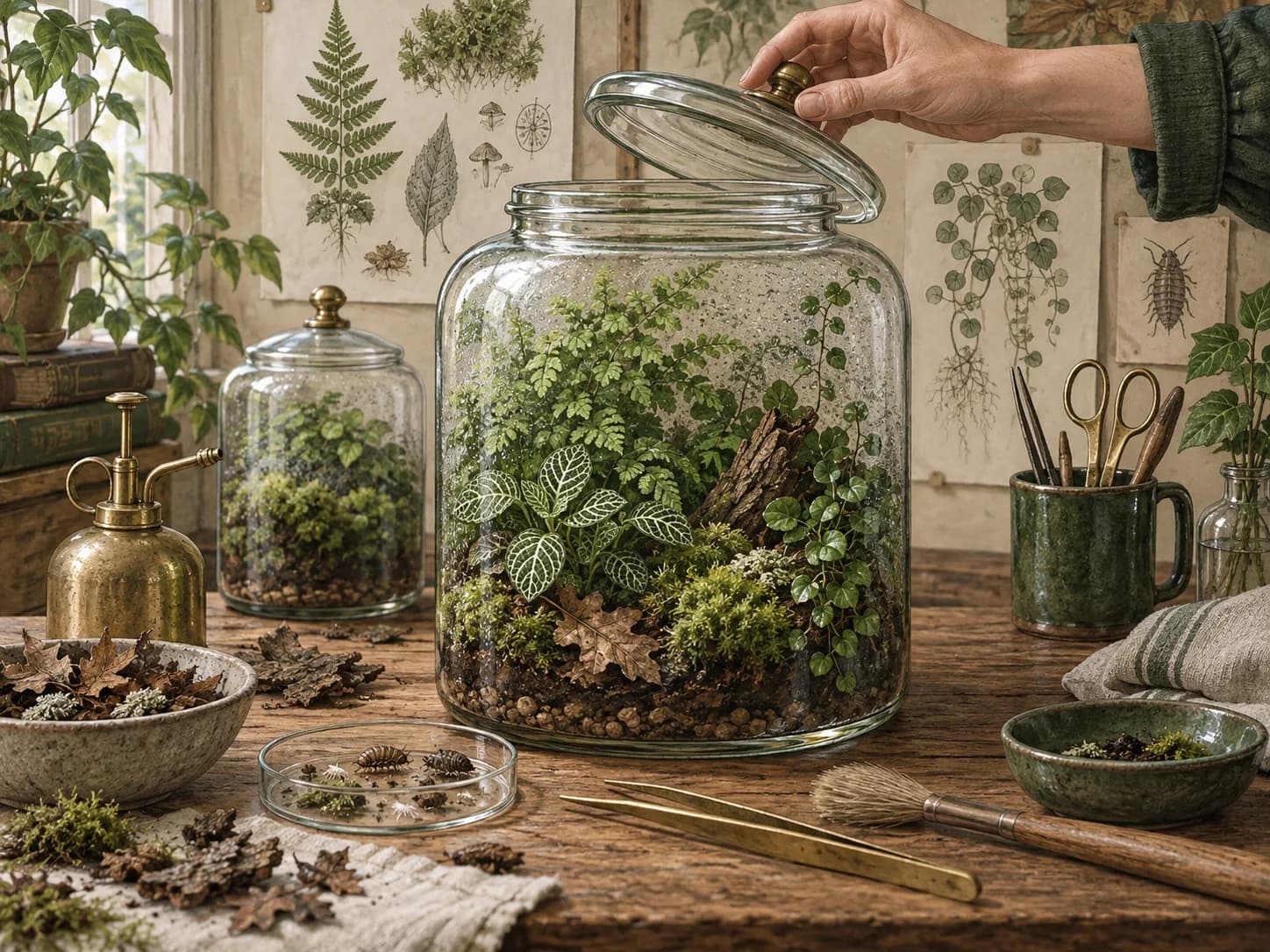
| Cottony or cobweb fluff on mix, wood, or moss | New wood or cork? Dead leaves left in? Glass fogged all day? Mix soggy? | Tweezers: lift dead tissue and the worst fluff. Vent several hours. Wipe glass. Stop extra misting. | Spreading over live leaves, or back within days: longer vents, check drainage, add springtails once the jar has cycled and is only damp. |
| Fine white threads through litter or mix; earthy smell | Even spread, not a powder-puff? Mix not sour? Plants still firm? | Leave it. This is usually saprotrophic mycelium doing woodland work. | If it turns fluffy, grey-green, or musty, treat as mould. |
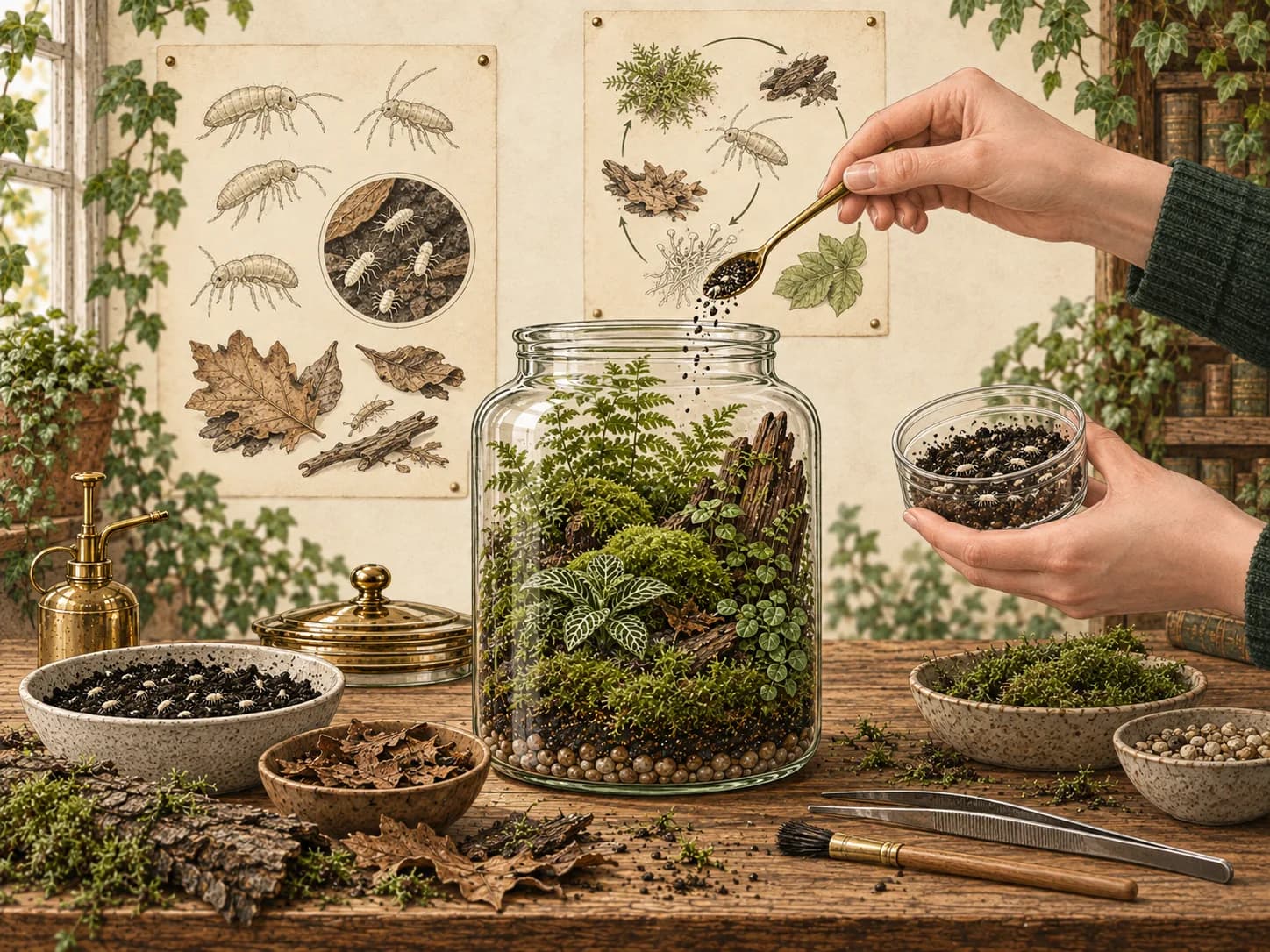
| Tiny white clusters on wood or mix | Already have springtails? Clusters stay put, not fuzzy? | Leave them — likely eggs. Good sign once the crew is in. | If they smear like mould or spread as cotton, treat as fluff. |
| Hard white crust on glass | Wipes off? Hard-water area? Not fuzzy? | Wipe. Switch top-ups to rain or filtered water. | Not a fungus. See watering. |
| Fluff on new cork or wood in week 1–4 | Piece recently added? Only on that surface? | Spot-wipe. Vent. Do not bin the whole jar. New-wood blooms are common and often fade. | Wood stays slimy, black, and foul: take it out, hot-soak or replace with cork. |
| Grey-green or black patches; musty smell | Covering moss, Fittonia, or Pilea depressa? Stagnant, dark corner? | Remove affected leaves. More light (bright shade, not sun). Vent daily for a few days. | Black growth plus sick plants: isolate, rebuild mix, bin the worst hardscape. Do not soak with peroxide. |
| Fluff plus plants melting | Mix wet? Glass never clears? | This is water + still air, not a mystery plague. Follow watering: siphon, vent, blot. | If plants are mush: troubleshooting pillar. Springtails will not save a swamp. |
| Allergy / asthma in the household | Jar badly furred? Need to open it? | Open outdoors or by an open window. Do not sniff the jar. | Persistent household symptoms: keep the jar closed, or take it apart outside. |